
FMCSA verification is built into onboarding, documents live in a vault with expiry tracking, everything signable is e-signed under the E-SIGN Act, and compliance gates keep unverified parties off the board. Carrier, broker, shipper or agent — the engine is the same; what it checks is shaped to your role.
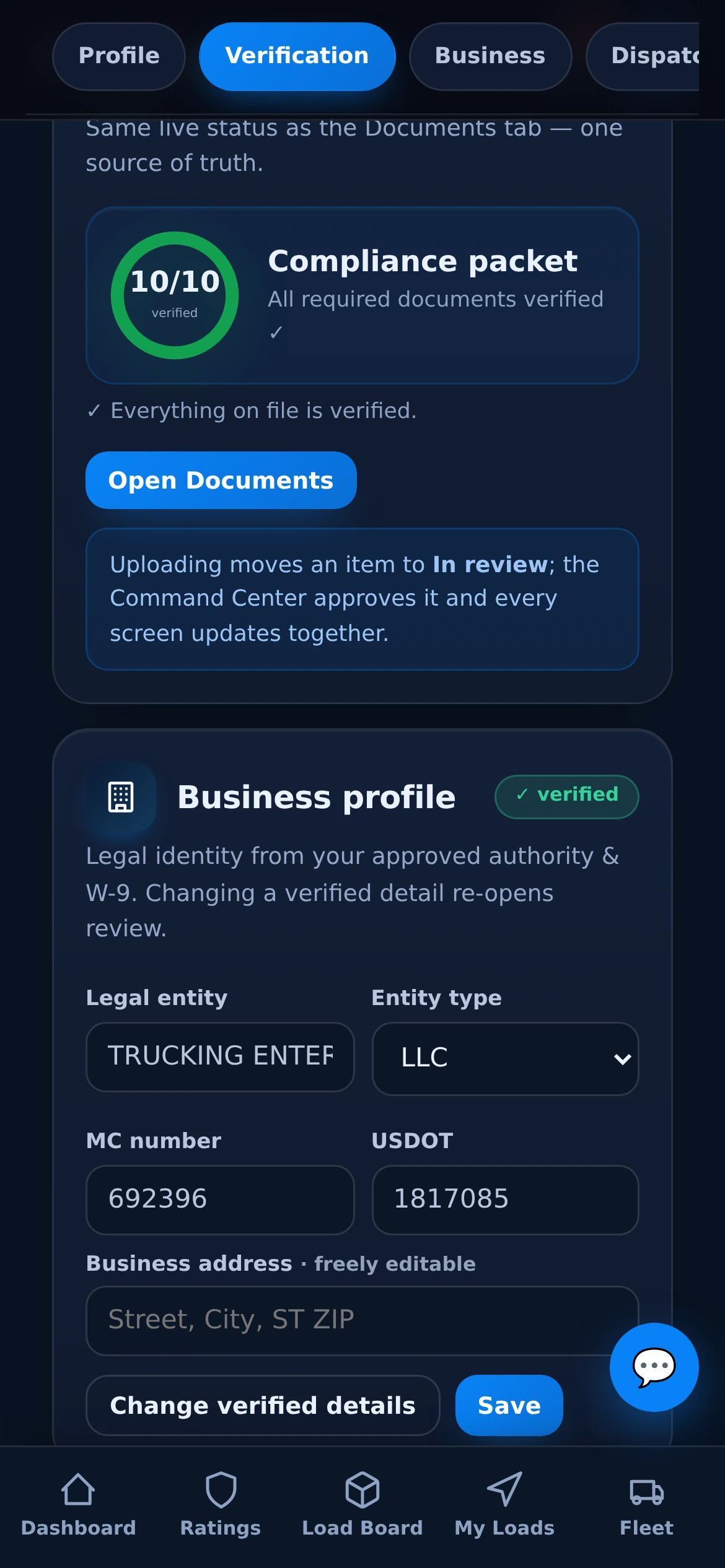
MC/DOT and broker authority checked against the federal record at signup and tracked after — status lives on the profile, not in a filing cabinet.
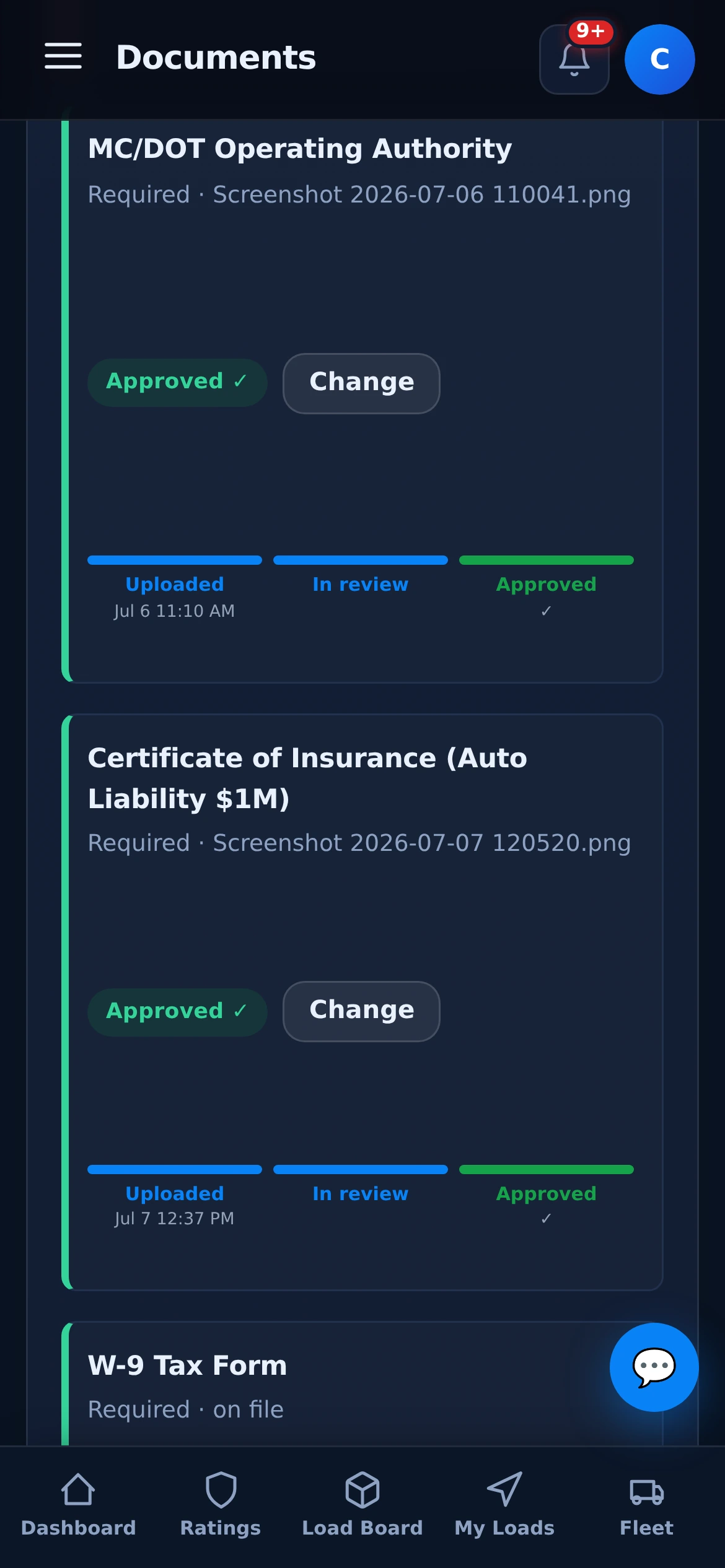
COI, W-9, authority letters, NOA — uploaded once, reviewed on a visible tracker, and expiry-warned before anything lapses.
Dispatch agreement and W-9 signed in-app under the E-SIGN Act; every rate confirmation is issued and acknowledged in-app.
Booking and posting require valid documents on both sides — so problems surface before the load, not at the dock.
Filing season? The compliance library covers authority & DOT setup, BOC-3 & UCR, Form 2290 HVUT, IFTA and per-diem.
Role-appropriate federal records and documents: carrier MC/USDOT status and insurance, broker authority and the federal bond, plus every uploaded document — checked for the right named party and a live expiry date, on a visible review tracker.
Document review typically completes the same day. Federal-record checks run automatically: the FMCSA authority lookup fires the moment your MC/USDOT is on the account, and a reviewer confirms the result (and, for brokers, the $75k bond) before you are cleared.
The vault warns before expiry. If a required document lapses, booking or posting gates pause until a fresh one is approved — problems surface before a load, never during one.
Yes — the dispatch agreement and W-9 are signed in-app under the E-SIGN Act, with PDFs generated instantly and stored on the account.
No. Carriers pass authority, insurance and health checks before they see freight; posting requires licensed broker (or verified shipper) status. Both sides of every load are verified — that is the whole point.