💰
$60/hour after 2 hours free time
ATRI (2024): drivers were detained on 39% of stops; detention cost trucking $15B in one year. Average charged rates run $60–$75/hr.

Detention is paid waiting time: when a shipper or receiver holds your truck past the free time written on the rate confirmation.
Enter your times — see exactly what the facility owes you.
Estimate only — your rate confirmation is the controlling document. On LoadBoot these figures are pre-agreed in writing on every load, and the claim builds itself from your trip data.
ATRI (2024): drivers were detained on 39% of stops; detention cost trucking $15B in one year. Average charged rates run $60–$75/hr.
You arrive at a Dallas warehouse at 8:00 AM for an 8:00 appointment. The dock does not release you until 1:30 PM. Your free time ended at 10:00 — that is 3.5 billable hours. At $60/hr you are owed $210, and with timestamps nobody can argue.
A parked truck still costs about $65–$70 every hour (truck payment, insurance, driver, opportunity). Free time covers normal dock work; past it, the facility is renting your truck.
2 hours per stop, measured from your on-time arrival (appointment time or FCFS gate check-in).
$60/hour or the higher rate on the posting, billed in 15-minute increments.
The broker must be notified BEFORE free time expires — LoadBoot stamps your arrival and drafts the message for you.
GPS-stamped arrive/depart, gate ticket photo, or signed in/out times on the BOL.
Accrues up to 5 hours; past an overnight hold, layover applies on top.
Tap ARRIVE the moment you reach the gate — GPS + time recorded
App warns you 30 min before free time ends
One tap sends the broker the pre-drafted notification
Tap DEPART when released — detention minutes calculated automatically
Evidence pack + amount attach to the trip invoice
Detention starts from your ON-TIME arrival. Late arrival = clock starts at appointment anyway? No — late arrival usually voids it.
Calling is not proof. Send the in-app notification so there is a timestamped record.
An in-time without an out-time is half a claim. Stamp both.
Submit with the delivery paperwork — weeks-old claims get "researched" forever.
GPS-stamped arrive/depart on every stop — measured, not argued.
The app warns before free time or notification windows expire.
Photos, receipts and times collected on the trip and attached to the invoice.
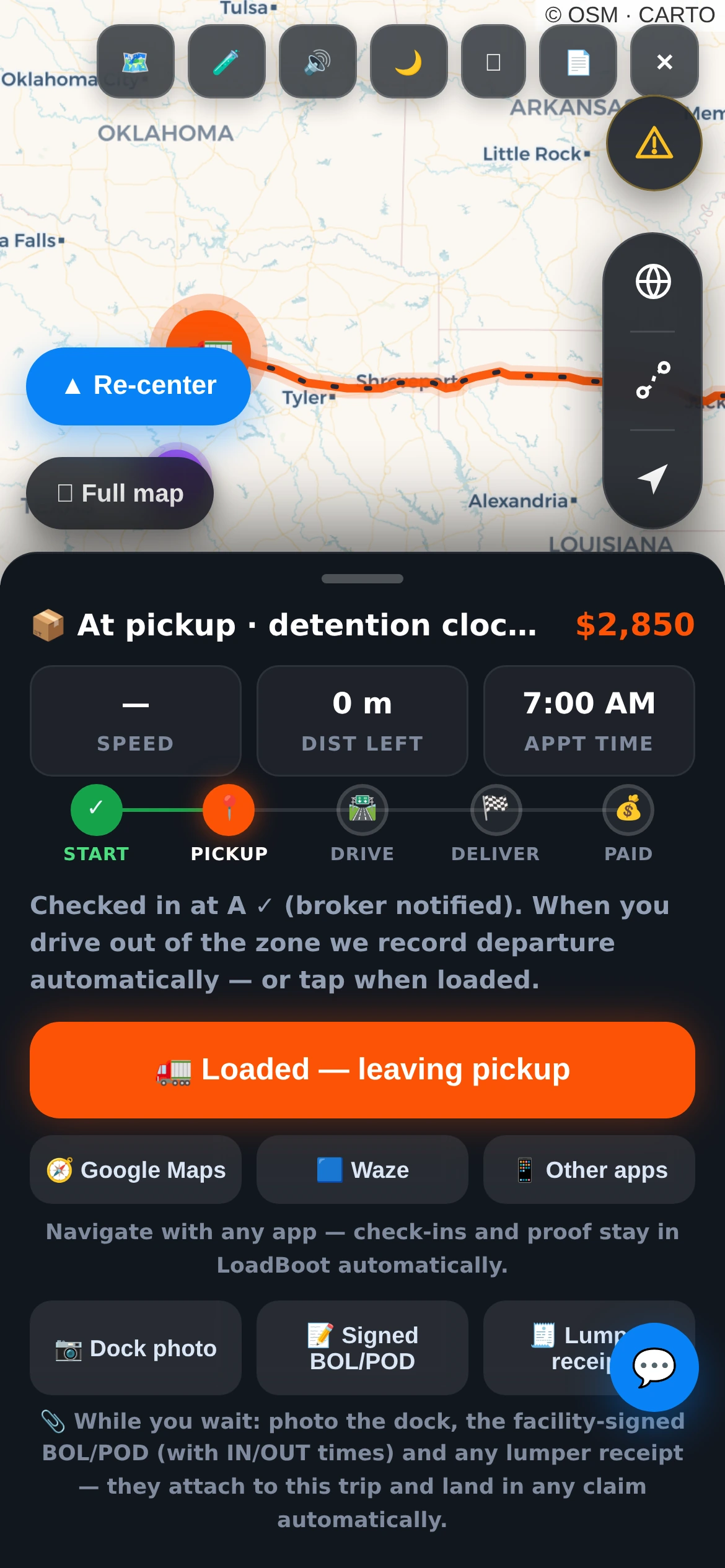
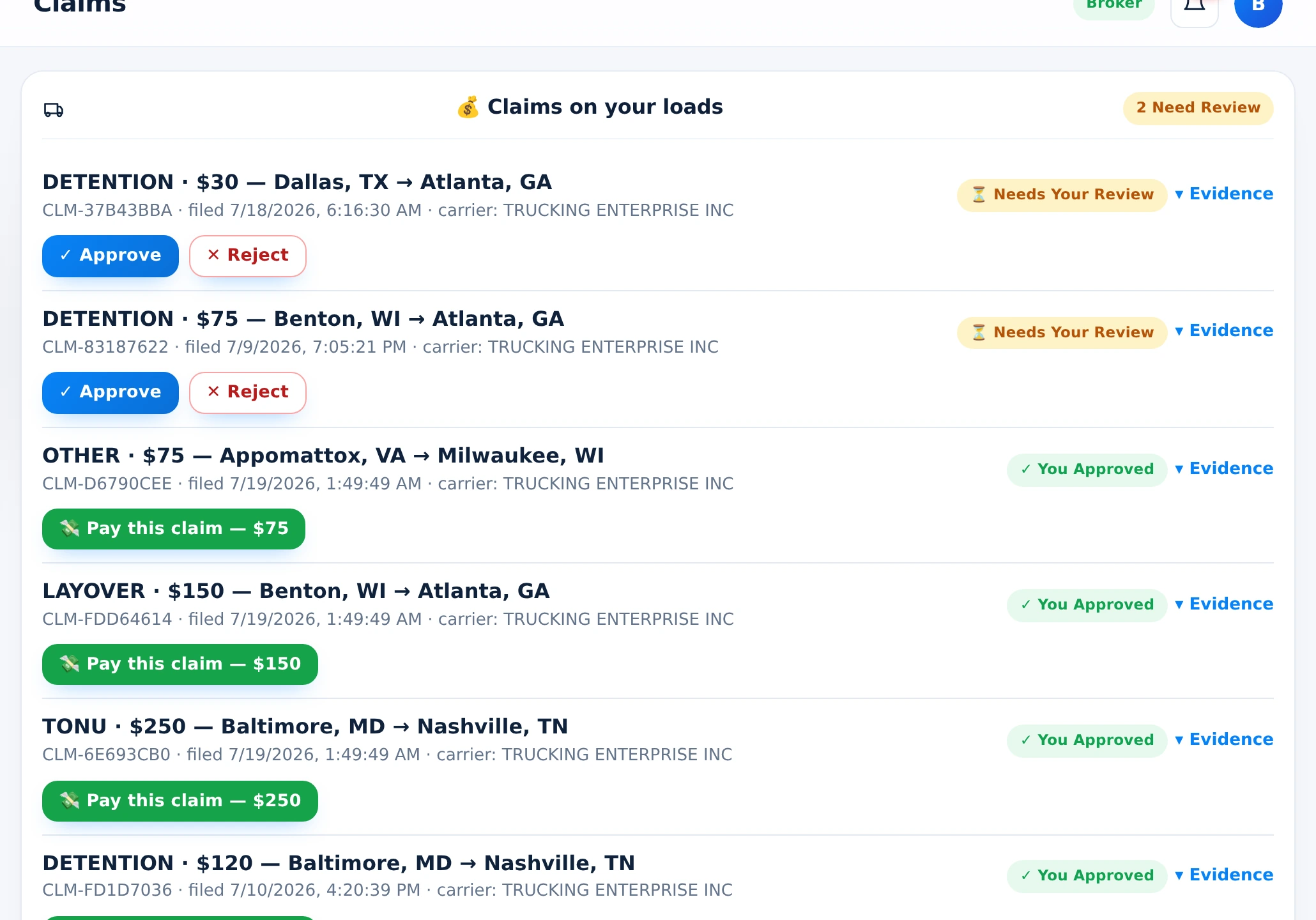
These are real portal screens, not mockups — the same rail that runs GPS tracking & proof and payments & settlements. The claim this page describes is drafted from that trip data and paid through that ledger.
Every minute past free time is measured by the server, not remembered. The claim drafts itself with GPS stamps, rides the trip invoice, and ages in the open until paid.
No inflated hand-written times — you see the same arrive/depart record the carrier does. Facilities that hold trucks show up in your data, so you can fix the dock, not fight the driver.
Published rates and symmetric evidence mean detention stops being a negotiation. Carriers stay, brokers keep capacity, and agents refer carriers into a board that pays what it promises.
Usually no — free time assumes an on-time arrival. Arrive inside the window and stamp it.
Your GPS arrive/depart stamps plus a gate ticket photo beat memory. That is the point of the app.
Yes — free time applies per stop.
The claim, evidence and rate confirmation go through LoadBoot dispatch; refusals are tracked on the broker’s record.
| Accessorial | LoadBoot standard | When it triggers |
|---|---|---|
| Detention — you’re here | $60/hr after 2 free hrs | Facility holds your truck past free time |
| Layover | $250 / day | A hold crosses into an overnight |
| TONU | $250 + deadhead | A confirmed load cancels late |
| Lumper | Reimbursed 100% | Third-party dock labor you fronted |
| Driver Assist | $75 / stop | The driver physically works the dock |
| FCFS | Detention still applies | No appointment — clock runs from check-in |
| Emergency Reschedule | Zero penalty | A verified on-road emergency |
Every one of these is written into the load before you accept it. Tap any row to read the full guide.
These policies are LoadBoot marketplace standards agreed between posting parties and carriers. They are operational terms, not legal advice; the rate confirmation for each load is the controlling document.
Timestamped photo of your truck AT the gate on arrival (phone camera puts time + GPS in the file)
The appointment time straight off the rate confirmation — on-time arrival is the foundation of every claim
GPS arrive/depart stamps (ELD or the LoadBoot app records them for you)
In/out times WRITTEN and SIGNED on the BOL by the facility — their own paper is the strongest proof
Gate ticket or lumper receipt showing times
The notification you sent the broker BEFORE free time expired (screenshot the send time)
On LoadBoot most of this collects itself: GPS arrive/depart stamps, stop-proof photo uploads, the pre-agreed rate card on every posting, and a one-tap claim built from the trip record.
Notify before free time ends — in writing. LoadBoot drafts and stamps this message automatically 30 minutes before your free time expires.
ATRI research: under 50% of detention invoices get paid, and weak documentation is the #1 reason. GPS-stamped arrive/depart ends the argument before it starts.
If you signed a rate con without a detention clause, that load is lost — negotiate BEFORE accepting. On LoadBoot every posting carries a written detention rate; a load cannot post without one.
Late paperwork dies in an inbox. LoadBoot builds the claim from trip data and files it the moment you tap submit.
Every LoadBoot load posts with this fee already agreed in writing. Your GPS timestamps are the evidence. The claim builds itself from the trip. And settlement runs through the platform — no chasing, no ghosting, no bond claims.
Join LoadBoot free — get paid what you’re owed →
Free verified carrier account · live loads with the full rate card in writing · GPS-proof claims