
The load you just called on was covered yesterday. The next three don’t exist at the posted rate. Here is why the boards stay broken, what it costs you per week, and what a truck operating system does differently.
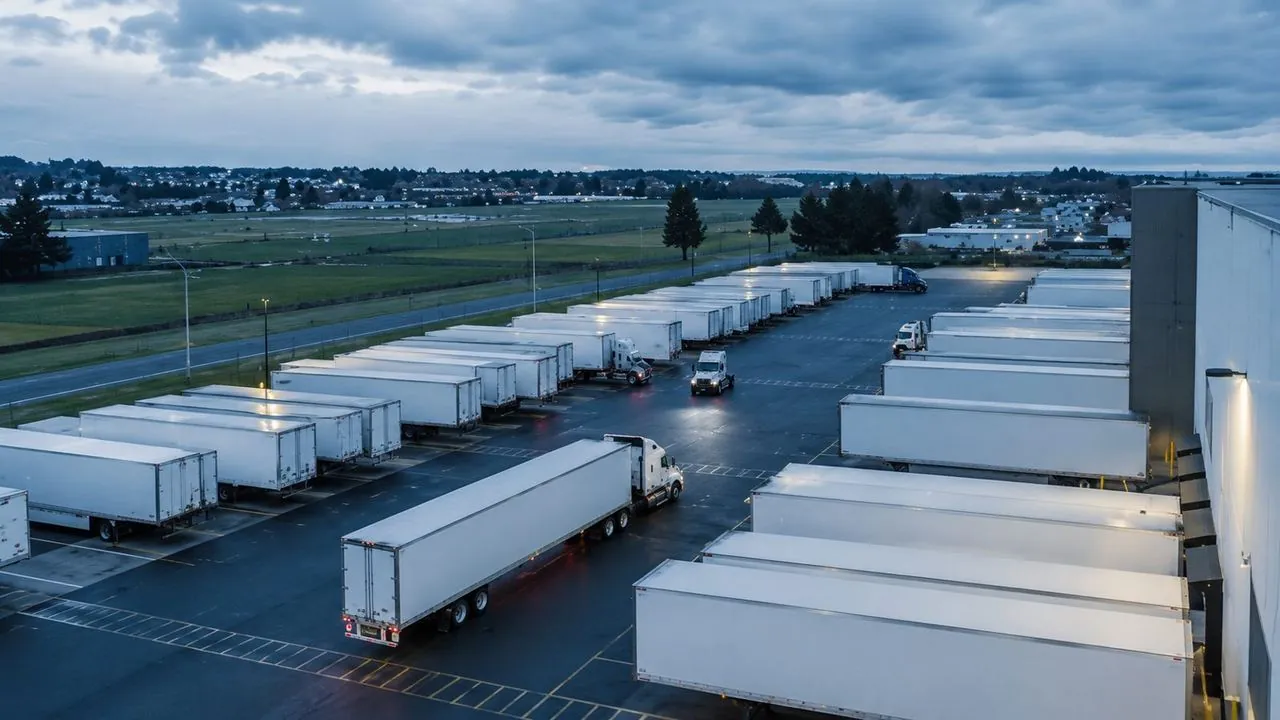
A ghost load is a posting for freight that is no longer available — usually because the broker covered it hours or days ago on another board and never took the post down. Big brokerages post the same load to multiple boards at once to maximize eyeballs; when it books on one, the copies stay up everywhere else. You call, you wait on hold, and the answer is the same every time: “that one’s covered.”
Add stale posts (pickup date already passed), bait-and-switch rates (the posted number was never real), and outright fake postings built for double-brokering scams, and a big chunk of what you scroll every morning simply is not freight you can haul.
The board is not showing you the market. It is showing you what nobody bothered to delete.
Say load-hunting eats 4 hours a day. Over a 5-day week that is 20 hours — two and a half full working days — spent NOT driving. At $2.30/mi and 50 mph, an hour of wasted searching is roughly $115 of revenue that never happened. Twenty hours a week ≈ $2,300/week in opportunity cost, before a single fraud loss, unpaid detention invoice, or bait-rate haircut.
Because the incentives point the wrong way. Boards charge brokers to post and carriers to search — volume is the product, so a board full of duplicate and dead posts still looks healthy. Nobody in that transaction is paid to delete a covered load, verify a rate, or guarantee the freight exists. FreightWaves put it bluntly: load boards are broken, and ghost loads are a big reason small carriers are exiting.
That checklist protects you — but notice what it really is: you doing the board’s quality-control job, for free, twenty times a day.
A truck operating system (trucking operating software) treats a load as a living record with a state — posted, offered, booked, dispatched, delivered — instead of a classified ad. Once software owns the state, every ghost-load failure mode disappears by construction:
| What happens | Legacy load board | LoadBoot (operating system) |
|---|---|---|
| Load gets covered | Post stays up — ghost load | Removed from every board instantly |
| Pickup date passes | Post lingers for days | Auto-pulled; broker emailed to reschedule |
| The posted rate | Opening anchor for a phone fight | Written rate card incl. accessorials |
| Deadhead miles | You guess from city names | Live road miles from your GPS |
| Broker identity | You verify manually, every time | Verified packet exchanged at booking |
| Detention / TONU | <50% of invoices ever paid | Pre-agreed rates, GPS evidence, auto-claim |
| Booking a load | 15–20 calls, 3–6 hours | Request or one-tap accept — minutes |
Ghost loads are not bad luck — they are the predictable output of boards that sell volume instead of truth. You can keep doing the board’s quality control by hand, twenty calls at a time, or you can move to software where a posting is only ever one of two things: real and bookable, or gone.
Start where the money is: check your lane on the live market rates page, read what you are owed on detention and TONU, then open a free carrier account and look at a board with nothing stale on it.
A ghost load is a posting for freight that is no longer available — usually covered on another board and never deleted. Brokers post the same load to multiple boards at once; when it books on one, the leftover copies become ghosts that waste carriers’ calls.
Nothing forces them to take posts down, and reposting everywhere maximizes their coverage odds. Legacy boards profit from posting volume, so dead posts linger. On a truck operating system the posting is tied to the load’s real state, so a booked or expired load leaves the board automatically.
Carriers commonly report calling on 15–20 loads over 3–6 hours before one books; on bad days 30+ calls book nothing. Brokers report roughly 7 calls to find one qualified carrier — the waste runs both directions.
Verify the MC number and FMCSA authority status, match the contact’s email domain to the company, be suspicious of rates far above the lane’s market rate, and never accept re-tendered freight from a “carrier.” Double brokering cost the industry about $4B from 2022–2025. Platforms that verify both sides and exchange packets at booking close most of these doors.
Software that runs the whole load lifecycle — posting, offers, booking, dispatch, GPS tracking, documents, invoicing and claims — in one place, instead of a classified-ads board plus phone calls. Because the system knows each load’s state, ghost loads and stale posts cannot exist on the board.
Both layers of one system: a live, verified load board where booked and expired freight disappears instantly — plus an optional flat-5% dispatch service where LoadBoot’s dispatchers find, negotiate and book freight for you (industry dispatch services typically charge 5–10%).
Get a free quote today and see how much more your truck could be earning with a dispatcher in your corner.
Get Started