Verification first
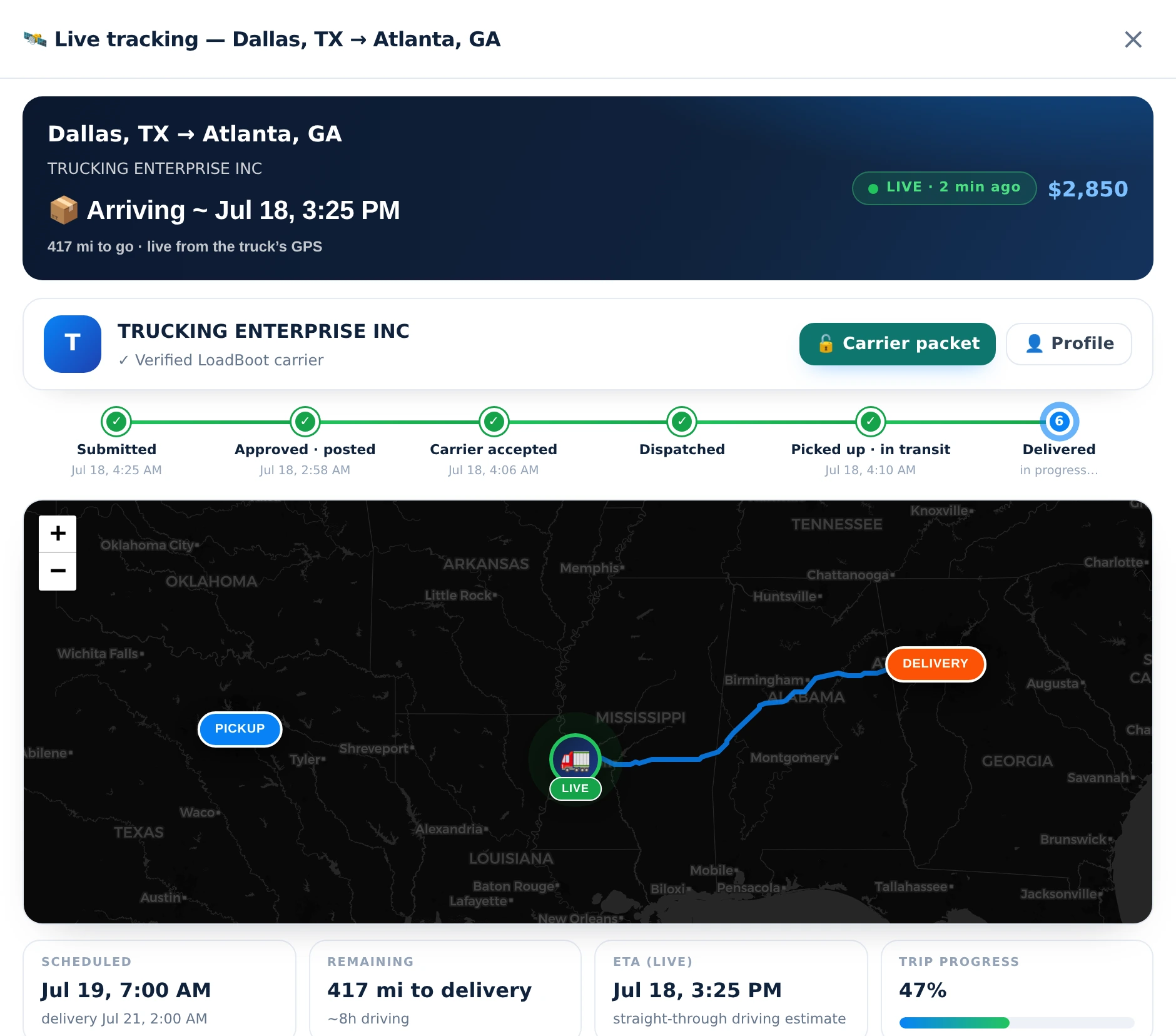
Nothing is rescheduled on a phone call alone. LoadBoot Dispatch runs a 4-point check: live GPS trail (stationary where reported), photo proof with matching time/location, a driver call-back, and the carrier’s claim history.
Driver supplies downtime
Only the driver knows when the truck will be road-ready (2h/6h/12h/24h/48h or “not sure” — then Dispatch calls first). The proposed window = old window + downtime + remaining transit, rounded to the next facility slot.
Proposed is not final
The carrier sees PROPOSED until every required party confirms. Broker-posted loads: broker accepts or counters. Shipper-originated loads: the broker forwards and the SHIPPER’s dock confirmation is final.
2-hour response window
Each responding party has 2 hours. No response → policy auto-reschedule: open delivery locks the proposed window; appointment delivery books the next available dock slot.
Counters are bounded
A counter-window must be within ±12 hours of the proposal and is matched against the driver’s readiness before it is locked.
No penalty on verified emergencies
No TONU, no late fee, no on-time-score damage for the carrier. This clause is accepted by every broker and shipper at posting — posting is impossible without it.
Driver communication line
Drivers may give facilities ETA/check-in updates only; every window change flows through LoadBoot Dispatch.
Fraud consequences
A false report (moving GPS during a “breakdown”, stale photos, repeated claims) suspends auto-protection, damages the carrier’s score and can end in a platform ban; the broker’s TONU rights revive.