
Native two-way QuickBooks Online sync is in production: delivered-freight invoices and expenses push into YOUR books and paid status flows back. ELD tracking connects with a pasted token, fuel cards import as CSVs, and the API and webhooks feed your TMS. Everything on this page is live — the roadmap section is honest about the rest.
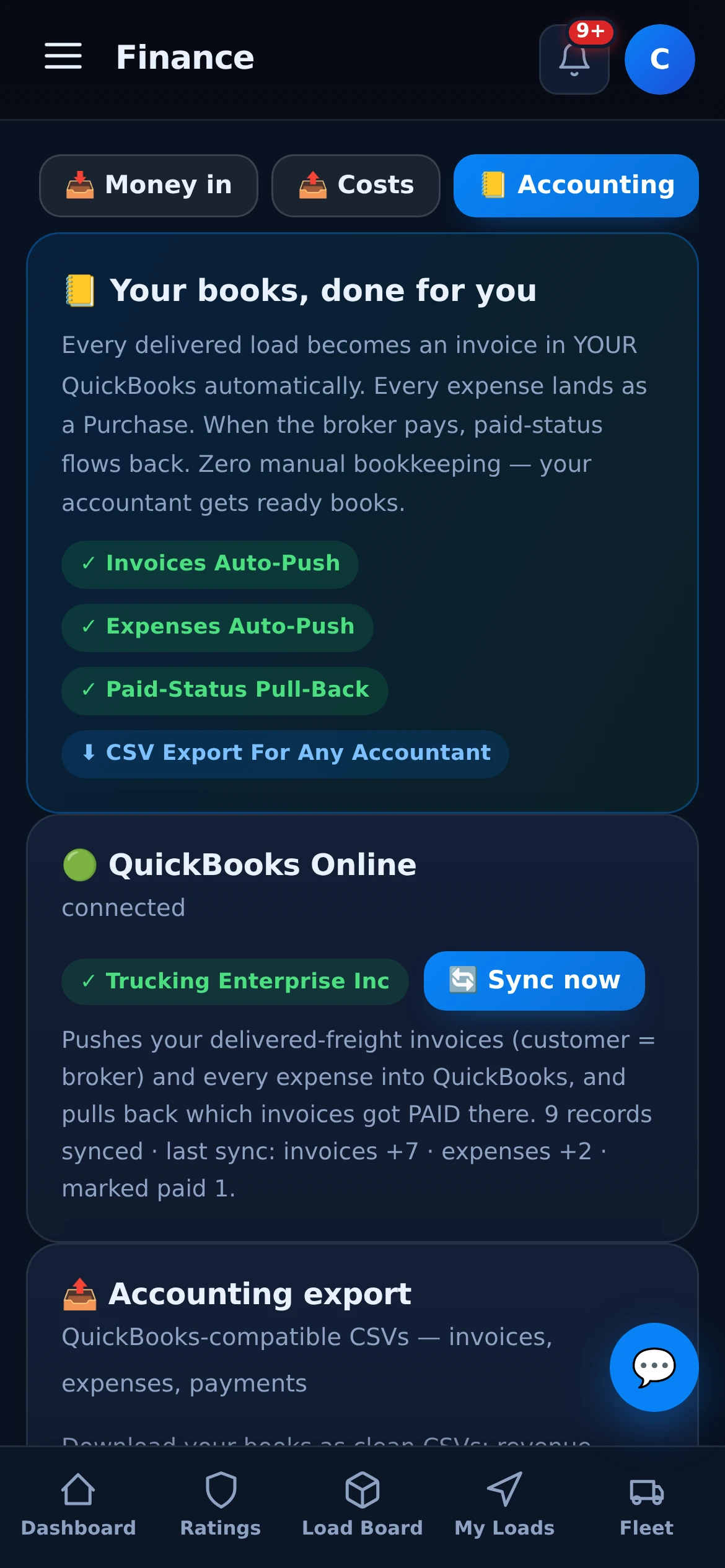
Connect your own QuickBooks Online in two minutes from Finance → Accounting. From then on the books keep themselves:
The developer portal issues keys for programmatic access — create, list and revoke from the dashboard.
Load, trip, document and delivery events delivered to your approved endpoints — your TMS knows the moment a truck arrives.
Authority and safety lookups power carrier verification — the same checks your compliance team runs, automated.
Per-truck utilization, $/mile, best lanes — and a fleet-wide optimized plan: each board load assigned to the truck it fits best, reload chained. See it.
Not live yet, and clearly labeled: fuel-card provider APIs (beyond statement import). Multi-fleet optimization shipped — it is in the Fleet tab today. When something new ships it is documented here first. Want it prioritized? Tell us.
Yes — native OAuth two-way sync with QuickBooks Online is in production. Connect from Finance → Accounting in the carrier portal: invoices and expenses push into YOUR QuickBooks, and payments received there flow back as paid status.
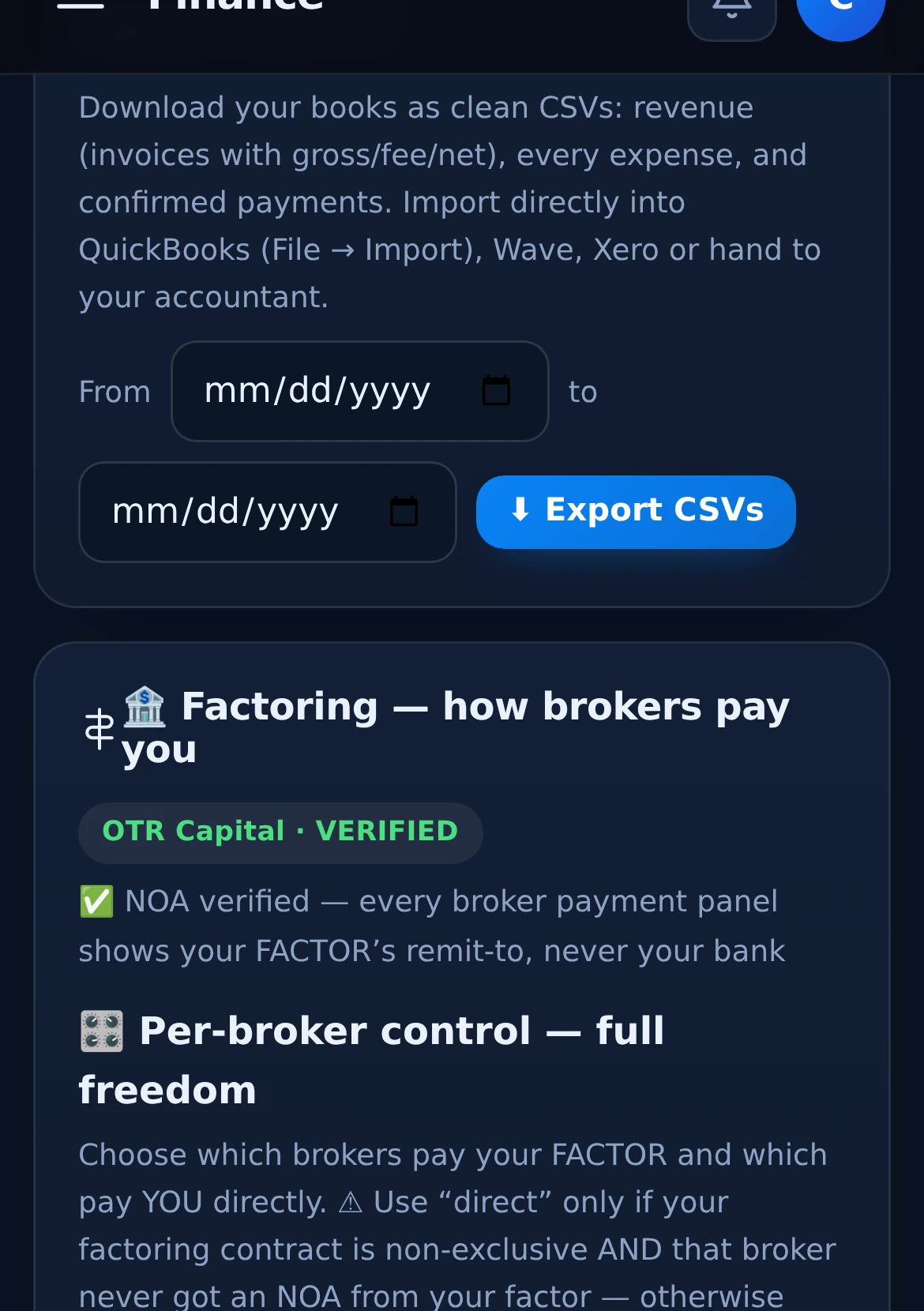
One click exports clean CSVs — revenue (gross/fee/net per invoice), every expense, and confirmed payments — ready for File → Import in QuickBooks, Wave, Xero or your accountant's workflow.
No — the driver's phone is the tracker. But if you already run Samsara or Motive, paste your API token and LoadBoot polls your trucks every 5 minutes, feeding the active trip even with the app closed. Any other device can POST positions to a secure webhook.
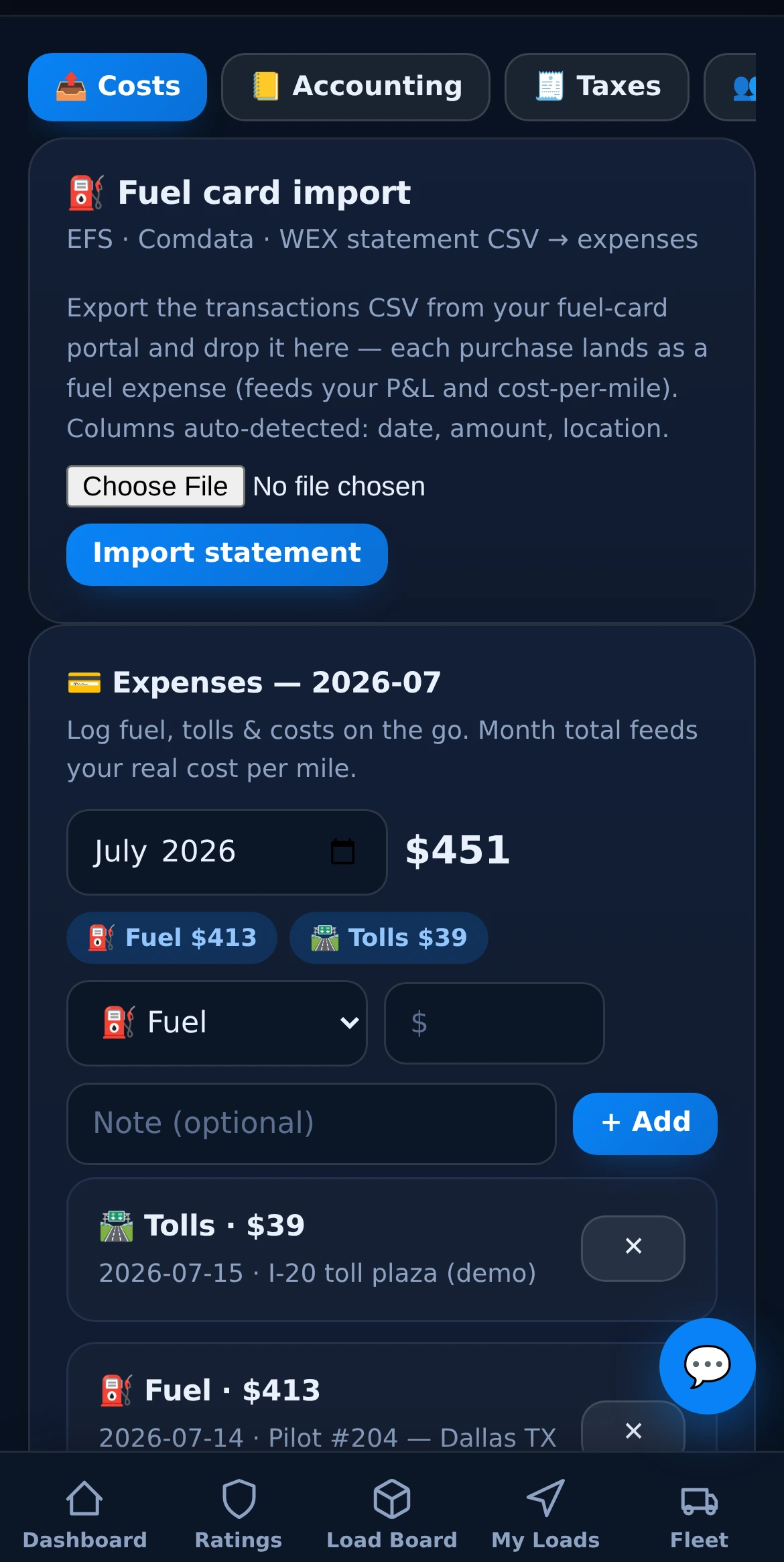
EFS, Comdata and WEX statement CSVs import directly — each purchase lands as a fuel expense on the right trip by date, amount and location.
Yes — the developer portal issues API keys and self-serve webhook endpoints — load, trip, document and delivery events POST to your URL automatically, with retries.
Fuel-card provider APIs (beyond statement import) — multi-fleet optimization has shipped and lives in the Fleet tab. When something new ships it is documented here first — nothing on this page is vaporware.