
The IRS does not want your meal receipts. It wants proof of the nights you were away — and that is exactly where drivers lose thousands. Here is the 2026 rule, the real math, and how to make the record write itself.
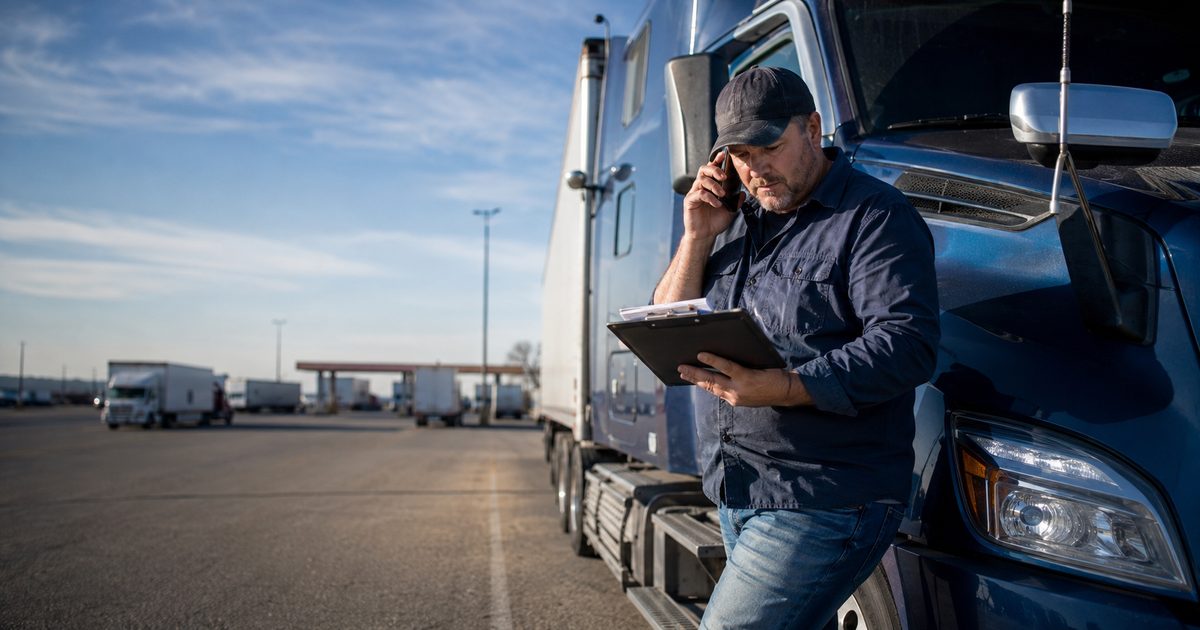
If you are an owner-operator who sleeps in the truck, there is a deduction sitting in front of you that costs nothing to earn, requires no purchase, and needs not one meal receipt. It is the transportation-industry per diem. And a large share of drivers either never claim it, or claim a fraction of what they are owed.
The scale is not small. Industry tax specialists put it plainly: a driver who spends around 200 days on the road and does not claim per diem is leaving over $11,000 in deductions on the table — every single year. For drivers running 250+ nights, the loss is bigger still.
That is not a rounding error. That is a truck payment. And the reason it goes unclaimed is almost never greed or laziness — it is proof. Keep reading; the fix is more boring, and more automatic, than you think.
Per diem is a flat daily allowance the IRS lets you deduct for meals and incidental expenses while you are away from your tax home overnight — instead of saving and adding up every receipt.
So the number that actually reaches your tax return is $80 × 80% = $64 per night.
One important limit: in trucking, per diem covers meals and incidentals only — not lodging. Tips, laundry on the road, that kind of thing. Your truck payment, fuel and repairs are separate deductions entirely.
Run it on your own year:
| Nights away | Deduction ($64/night) | Roughly saved* |
|---|---|---|
| 150 | $9,600 | ~$3,500 |
| 200 | $12,800 | ~$4,700 |
| 250 | $16,000 | ~$5,900 |
| 300 | $19,200 | ~$7,100 |
*A deduction is not a refund — it lowers the income you are taxed on. For a self-employed owner-operator, the combined bite of self-employment tax (15.3%) plus federal income tax often lands somewhere near the mid-30s as a marginal rate, so every $100 deducted commonly keeps roughly $35–$37 in your pocket. Your exact number depends on your bracket. Talk to your CPA.
Even at the low end, this single line is usually worth more than a month of net revenue to a solo owner-operator. And notice what it costs you to claim it: nothing. You already slept in the truck.
This is where a lot of drivers get burned, so read it twice.
Also non-negotiable: you must be away from your tax home overnight, long enough to need rest. A 14-hour turn where you sleep in your own bed is not a per diem night. The overnight is the whole test.
Here is the trap. The IRS does not want your meal receipts — that is the entire point of a flat allowance. What it does want, if it ever asks, is evidence of which nights you were away from your tax home.
Now be honest about what most owner-operators actually have at tax time:
So one of two things happens. Either the driver does not claim it at all (“I can’t prove it, skip it”), or the CPA lowballs the number to stay safe. Both cost real money, quietly, every year. The deduction was never the hard part. The record was.
This is precisely the problem Loadboot was built to remove, and the fix comes free with how the platform already works.
Every load you run on Loadboot is GPS-stamped end to end. When you roll out, the trip starts. When you enter the pickup geofence, arrival is recorded. When you clear the delivery, the drop is stamped. You do not tap anything — the truck’s position writes the record.
Those stamps are not just for detention claims and on-time scores. They are exactly the substantiation the IRS asks for: a dated, objective record of which nights you were away from home. So the Tax centre simply counts them:
Nights away, the deduction, the deadlines, and your Schedule C categories — assembled from work you already did. Nothing to remember in January. Nothing to reconstruct in April.
And because the same trip record drives your money, the rest of the picture lines up with it:
Every load carries its own profit statement. Detention and accessorials land on it automatically from the same GPS stamps, so the income side is as complete as the deduction side. At tax time you are not hunting — you are exporting.
Searching for an older year because you are amending a return or catching up on back taxes? Here is the IRS special transportation-industry M&IE rate for every year, and how much of it was deductible. Amended returns can generally be filed up to three years back — if you never claimed per diem, those years may still be worth real money.
| Tax year | Rate per full day (CONUS) | Deductible share | 200 nights is worth |
|---|---|---|---|
| 2018 | $63 | 80% | $10,080 |
| 2019 | $66 | 80% | $10,560 |
| 2020 | $66 | 80% | $10,560 |
| 2021 | $66–$69 | 100% (COVID relief) | $13,200+ |
| 2022 | $69 | 100% (COVID relief) | $13,800 |
| 2023 | $69 | 80% | $11,040 |
| 2024 | $69–$80 | 80% | $11,040+ |
| 2025 | $80 | 80% | $12,800 |
| 2026 | $80 | 80% | $12,800 |
Rates change each October 1 with the federal fiscal year, so a calendar tax year can straddle two rates — the IRS lets you use the rate in effect for each night, or apply a consistent method. Partial travel days count as ¾ of a day. When in doubt, your nights-away log decides everything, which is exactly the record most drivers never kept — and the one Loadboot builds automatically.
Per diem is the biggest one drivers miss, but it is not the only one. The same records feed the rest of your return:
And the calendar you cannot ignore: quarterly estimated taxes (Apr 15, Jun 16, Sep 15, Jan 15) plus Form 2290 (HVUT) by Aug 31 if your truck is 55,000 lb or heavier. Miss those and penalties eat the deduction you just fought for.
Per diem is the rare deduction that is large, legal, and free — you have already earned it by sleeping in the truck. The only thing standing between you and roughly $64 for every night you were out is a record of the nights.
You can build that record by hand, in a notebook, hoping you remember. Or you can run your freight on a system that stamps every trip with GPS by default, counts the nights for you, files the detention you earned, and hands you a Schedule C rollup and a per-load profit statement at the end of it.
The deduction was always yours. Loadboot just makes it provable.
Loadboot is a dispatch and carrier-operations platform, not a tax preparer or CPA firm. The figures here are estimates to help you plan; per diem rates, deductibility and eligibility change and depend on your circumstances. Confirm your numbers with a qualified tax professional before filing.
For 2026 the IRS special transportation-industry rate is $80 per full day within the continental U.S. (CONUS) and $86 per day outside CONUS. Partial travel days — the day you leave and the day you return — are claimed at a reduced amount, commonly 75% of the standard rate.
It is 80% deductible for workers subject to DOT hours-of-service rules, which includes truck drivers. Regular business travellers only get 50%. So the effective deduction is $80 × 80% = $64 per full night away.
No. After the Tax Cuts and Jobs Act removed unreimbursed employee expenses, W-2 company drivers cannot deduct per diem on their tax return. Only self-employed owner-operators filing Schedule C can claim it. Some carriers instead run a per diem PAY program through payroll, which is a different thing entirely.
No. That is the whole advantage of a flat per diem — you do not save individual meal receipts. But you DO need records proving which nights you were away from your tax home overnight. Trip records, ELD logs or GPS-stamped load records all work. Loadboot produces this automatically from your trips.
At $64 per night, 200 nights away is $12,800 in deductions and 250 nights is $16,000. Depending on your bracket and self-employment tax, that typically keeps roughly $4,700–$5,900 of real cash in your pocket. Specialists note that drivers who skip it lose over $11,000 in deductions a year.
Evidence of the days you were travelling away from your tax home overnight — not meal receipts. A dated, objective record is what matters. GPS-stamped pickup and delivery times, like the ones Loadboot writes on every trip, are exactly that kind of record.
Get a free quote today and see how much more your truck could be earning with a dispatcher in your corner.
Get Started