
The biggest freight economy in America is also its most regulated. The ports engine, the produce calendar, the I-5 spine — and the CARB/AB5 layer every CA operator must respect.
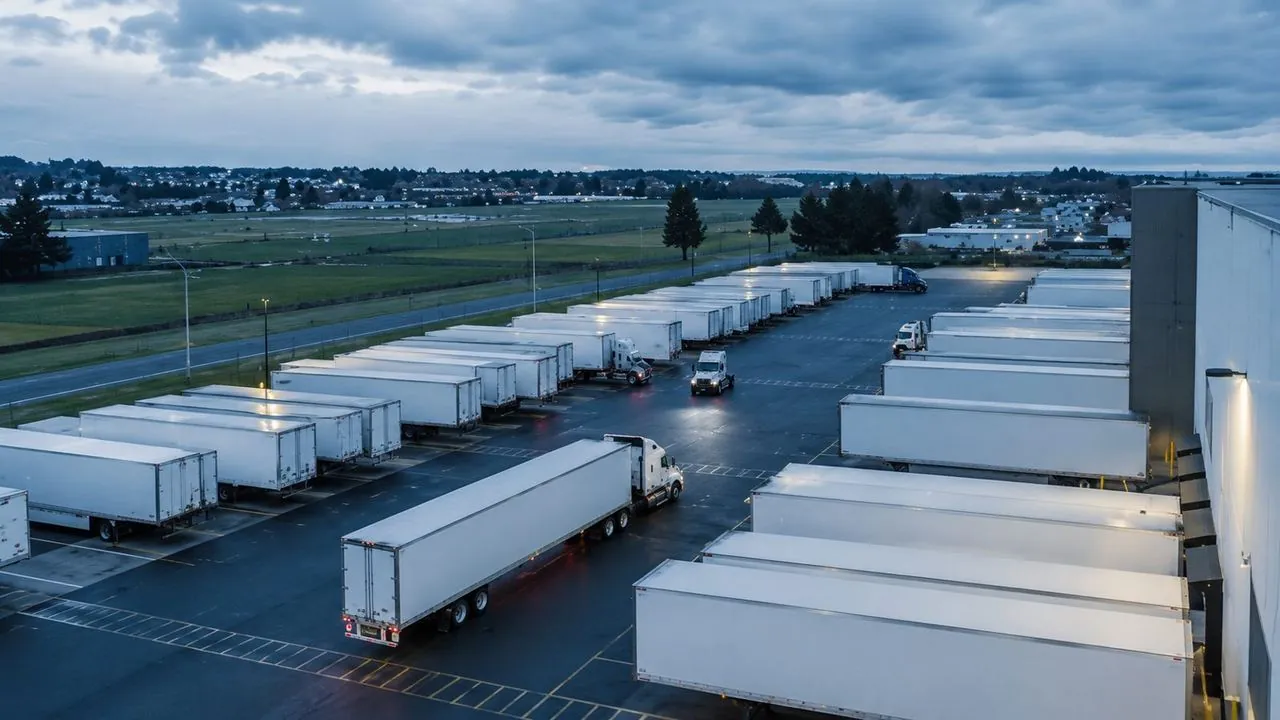
California is the largest freight economy in the country: the twin ports of Los Angeles and Long Beach move a huge share of America’s imports, the Central Valley grows a stunning portion of its produce, and forty million consumers pull retail freight into every metro. It is also the most regulated place in America to run a truck. That combination — enormous volume plus real compliance rules — is exactly why disciplined operators do well here and casual ones bleed.
The structural fact to price on every California load: the state IMPORTS more truck freight than it exports on many consumer lanes, while EXPORTING seasonal produce in huge waves. Inbound and outbound rates can live in different worlds. Carriers who treat “a California load” as one market get burned by the imbalance; carriers who price the direction win.
LA/Long Beach freight ripples far beyond the harbor: transloaded import freight moves to Inland Empire warehouses (Ontario, Fontana, Riverside), then fans out across the country. You do not need port credentials to earn from this engine — the Inland Empire outbound market is one of the busiest van markets anywhere. The catch is congestion economics: appointments, yard dwell and traffic can eat a day. This is precisely where measured detention (arrive/depart stamps) stops being a nicety and becomes your margin.
From Bakersfield to Fresno to Salinas, the Valley loads reefers nearly year-round with real surges by crop: leafy greens out of Salinas, stone fruit and grapes in summer, citrus in winter. Produce pays for reliability — strict cold chains, early appointments, receivers who reject late trucks. Reefer operators who build a reputation for showing up cold and on time get the repeat freight; everyone else gets the leftovers. Dry van operators note: produce season lifts EVERYTHING outbound, including van rates, as capacity drains into reefers.
The I-5 spine (LA → Sacramento → Oregon/Washington) and Highway 99 through the Valley towns are the workhorses. LA↔Bay Area runs like a conveyor both directions. Out-of-state, LA→Phoenix and LA→Las Vegas are liquid daily moves; the long haul east (I-10/I-40) pays well outbound but demands a plan for the return — the classic California trap is a strong outbound rate followed by a cheap crawl home. Price the ROUND TRIP, not the leg.
Two California-specific realities belong in every operating plan. CARB: the state enforces its own emissions rules for trucks operating in California, and equipment that does not meet the applicable requirements can be barred from operating there — check your truck’s status against CARB’s current rules before committing to CA freight. AB5: California’s worker-classification law has reshaped how owner-operators contract with motor carriers in-state; structures that are routine elsewhere may need review here. Neither is a reason to avoid California — both are reasons to verify your setup with the official sources (CARB, EDD/DIR) or qualified counsel before you build a business on CA lanes. This guide is education, not legal advice.
Produce sets the calendar: Salinas ramps through spring, the Valley peaks through summer, citrus carries winter. Retail import waves build into late summer ahead of the holidays and pull Inland Empire outbound tight. January is the reset, as it is everywhere — but California’s floor stays firmer than most states because the consumption engine never stops. The move is the same as ever: re-price your floor weekly and never haul July freight at January rates.
Direction-aware pricing (inbound vs outbound are different markets), produce-season timing, Inland Empire reload chains so a port-area drop becomes a same-day turn, detention discipline at congested docks, and the paperwork rhythm California receivers demand. On LoadBoot that rides on the operating software — measured arrive/depart stamps, immutable rate confirmations, document packs, and a P&L that shows what each CA week actually made — for a flat 5% only when we book you.
California rewards carriers who respect its two truths: the freight is enormous, and the rules are real. Price the imbalance, ride the produce calendar, keep CARB and AB5 questions answered by official sources, and protect every dock hour with measured stamps. If you would rather drive the I-5 than manage all of that from the cab — that is the job we do all day.
Yes — interstate authority covers loads in and out of California. Your equipment must meet CARB’s applicable emissions requirements to operate in the state, so verify your truck’s status on CARB’s official resources before committing to CA lanes.
AB5 changed how worker classification is tested in California and reshaped many in-state contracting structures. Interstate operations and different business setups are affected differently — get current guidance from official sources or counsel; do not rely on forum posts (or this article) as legal advice.
Reefer owns the produce economy and pays for cold-chain reliability; dry van rides the ports/Inland Empire import engine; flatbed serves construction and solar. As everywhere, the best equipment is the one you keep loaded both directions.
The same flat 5% of the linehaul as every carrier — no setup fee, no monthly minimum, no contract. Every load shows its full rate card before you accept, and detention is measured from your own arrive/depart stamps.
Get a free quote today and see how much more your truck could be earning with a dispatcher in your corner.
Get Started